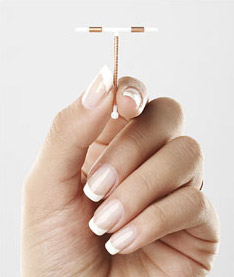
 Recently Kate Klonick of State.com pronounced IUDs the best form of birth control for young women, sending the feminist blogosphere abuzz with bloggers sharing their IUD experiences. One thing is clear about this often overlooked birth control method: many people are unclear about the safety of IUDs, particularly for women who have never given birth. It's no wonder when women are getting such conflicting messages from the medical community. Erica Sackin from Planned Parenthood of NYC tries to explain why the message is so confusing.
The IUDs of our mothers' generation were linked to some pretty scary side effects, such as increased risk of pelvic inflammatory disease and infertility, but studies have found that the models on today's market, ParaGard (contains copper but no hormones) and Mirena (releases hormones into the uterus locally but contains no copper), are much safer. Although research shows that the IUDs currently on the market are safe, many doctors still refuse to insert them. Sackin lists possible reasons for this:
As with any birth control method, there are pros and cons which must be weighed based on your specific needs/what you're willing to commit to, and as Pearl wrote earlier, the best person to answer any contraceptive-related questions is a trusted vagina doctor. Of course you will not be protected against STDs with this method, but the pros of IUDs for women in monogamous relationships are impressive: cost effective, a non-hormonal option, nothing to remember to take, put in or take off and most importantly, a 99% efficacy rate in a real life setting. But with so many detractors of this method being doctors and infertility (supposedly) at stake, many young women, including me, are hesitant to take the plunge.
- S/he might still be reading old research.. It’s possible that your doctor simply isn’t familiar with the latest research or is following older clinical protocols.
- S/he might think it’ll be too difficult. It’s also possible that your provider is under the impression that an IUD isn’t possible to insert into a woman who hasn’t had children because their cervix and uterus hasn’t yet had to expand for childbirth. This also doesn’t mean you can’t insert an IUD into a woman who hasn’t had children, it just means it might be a little more difficult. Plus, it’s different for every woman -- our providers have sometimes had an easier time inserting a device into a woman who’s never had children than one who’s had four children.
- They might be worried about STDs. Since IUDs don’t protect against STDs, some providers might be hesitant to give them to women who aren’t married or in serious, long-term monogamous relationships. It goes without saying that while you should always be safe and protect yourself against STDs, this isn’t a reason for a provider to refuse an insertion.
It'd be great if the medical community could agree on the safety of IUDs (I suspect some doctors just have some catching up to do on the research), so that more women know there is another effective birth control option to consider and we could catch up to our European counterparts in usage rates.


No comments:
Post a Comment