Tonight is the first meeting/officer elections for feminist organizations on campus! We were a little slow on the campus orgs uptake, which is sad, but SO JAZZED about helping out with ALL THIS STUFF:
-Bringing Jessica Valenti to campus
-Bringing The Vagina Monologues to campus
-Raising date-rape awareness through a local Take Back The Night event
-Exposing fake clinics in Stillwater
-STRAIGHT GETTIN' IT FEMINIST STYLE
Further bulletins as events warrant!
Monday, August 31, 2009

Sunday, August 23, 2009
Can I Have My Receipt For That Derogatory Term Please
Whenever someone uses the phrase "taking back the kitchen" or "taking back 'bitch'" the only thing brought to mind is someone standing in line at Customer Service holding entire cooksets, like, "Um, someone gave me 100% of domestic duties for my wedding, I think it's because I am a ladie, but can I have some intellectual credibility instead?"
This post is really about cognitive dissonance of two types: one occurs when we call other women names like "slut" and "bitch," and the other when we feel "feminist guilt" for enjoying things like quilting and baking (the "tools of the patriarchy" or whatever).
The first type is definitely the more legitimate, real-life guilt. It's true that giving derogatory terms legitimacy is dangerous and harmful: if women are calling women - and not necessarily even sexually promiscuous/active women - "sluts" AND MEANING IT, why can't men do it, too? And - we know where this is going - this just makes the "slut/stud" double standard even stronger. One solution is to stop using the term, and ask your friends to stop using it, too. The more fun way (and the more realistic and less feminist-dogmatic way) is to "take back" the term, playing with its intersecting meanings. In keeping with the example, "slut" is not just a word that "the patriarchy" came up with to "keep us down." It's not even a conscious attempt to degrade women. It's a word that has been assimilated so deeply into our culture that it means something different to every single person.
SO: maybe someone gets called a slut because she had two one-night stands in two weeks. Somehow, she doesn't seem insulted - in fact, she laughs and jokes, seems at ease and even proud of herself. This is probably a woman who has internalized "slut" and re-defined it as "a woman who is confident in herself sexually and has a healthy attitude about casual sexual encounters." Again, this is just one possibility, and sort of a "Taking Back Terms 101."
The second type of cognitive dissonance we might feel is that little voice that tells us, "don't bother learning how to bake! that's just another time-consumer, keeping you in the mixing bowl instead of mixing it up in the real world!" This is a vestige of the Second Wave, which rejected all superficial forms of "patriarchal oppression," even though some people just (gasp!) ENJOY making cookies (and then eating all of 'em) or, more seriously, MUST learn to cook and bake because they don't live in an urban area where takeout and fast-food are readily available. Again, this is 2009, and we can define "everyday feminism" - that is, not our theories about social structures, but the actions we take, the hobbies we choose, and the jobs we do - in any way we desire. If making a full-size quilt makes us feel accomplished, creative, and powerful, that's a form of feminism (albeit a feminism that only includes those who have the time and resources to undertake such a project).
There's a documentary out called "Handmade Nation" about the D.I.Y. craft culture that burgeons on sites like etsy.com and in ReadyMade magazine, among others. It's clear from books like Stitch n' Bitch and Subversive Cross Stitch that crafts are no longer just busy work for housewives, but are proving a very fruitful area for the D.I.Y. girls to reclaim.
SO ANYWAY, what I'm really getting at with all of this is that there are not two sides to every story when it comes to feminism and any ladie-type issue - there are about 3 billion. We are all feminist theorists, deciding for ourselves whether to stomp out derogatory terms or just take them under our wing and feed them vegan cookies of questionable tastiness.
(And yes, I did made a big ol' quilt this summer, and I love it. I had no idea what the hell I was doing and stabbed myself with needles a lot, but the finished product was worth it!)
Tuesday, August 18, 2009
OK LAWMAKERS AND WOMEN ARE NOT BFFS
Props to the founding fathers for designing our government. No, it's not because we have the right to teabag in public spaces; it's because today the balance of power between the three branches prevented Oklahoma lawmakers from enforcing a silly, paternalistic law. A judge ruled this afternoon that a law requiring doctors to give women seeking abortions an ultrasound was unconstitutional. The law also required doctors to explain to the pregnant woman what she was seeing on the ultrasound because, you know, pregnant women don't already know they've got a human being inside them. The judge didn't really address abortion and ultrasound laws but struck down the law because legislators violated a rule when making it. Thanks to Reproductive Services in Tulsa and the New York-based Center for Reproductive Rights for challenging the law.
Saturday, August 15, 2009
Late Abortion Providers: Heroes or Villians?
Heroes of course! This IS a feminist blog.
Since the murder of Dr. Tiller in May, I've had more and more conversations with friends about abortion providers' motives. Some believe the anti-abortion advocates' carefully-crafted narrative of an immoral, money-hungry doctor, performing abortions for any reason at any stage of pregnancy; many friends were simply baffled as to why male doctors, like George Tiller, would literally risk their lives to perform this service for women. Viewing abortion providers as motivated by greed never made much sense to me because as doctors, they could have made a great living no matter what they specialized in and when you factor in the constant physical and legal threats, it just doesn't seem worth it. Plus, since 1973, the cost of abortion ">has remained almost the same when adjusting for inflation; this is not true for most other medical procedures. It makes more sense to see these people as genuinely motivated by a concern for woman's health and reproductive freedom. Countless testimonials from Dr. Tiller's former patients and a new Esquire article profiling another late abortion specialist, Dr. Warren Hern, seem to support this.
The long, sad Esquire article attempts to humanize someone whom others have worked very hard to dehumanize. We learn that Dr. Hern has a wife, mother and life outside his clinic just like any other doctor in America except most don't work in a heavily guarded facility and most don't have to worry about their mother receiving threatening phone calls. It's strange that late abortion providers are the most reviled abortion providers yet they do the abortions that many identifying as pro-life would actually agree are unfortunate but necessary. It's illegal in Colorado for Dr. Hern to perform a late abortion unless the woman's health is at risk or there is a catastrophic fetal anomaly.
In the strangest part of the article, Richardson reveals that Dr. Hern sometimes gets treated with "contempt and disgust" by patients who are ardently against abortion in any circumstance except their own. You'd think these women, knowing the difficulty of a catastrophic pregnancy, would at least support similarly-situated women having a CHOICE and some control over what happens to their body. Up against such hatred , he explains:
Reading this article made me want to do something to change the public's perception of late abortion providers, which if accomplished, would also encourage more doctors to perform the procedure. I'm not sure what can be done, but forwarding the Esquire article or others like it to friends and family members who believe the anti-choice movement's portrayal of abortion providers would be a start. They probably won't be convinced to identify as pro-choice, but they might see that these doctors are actually the heroes performing abortions in circumstances where most Americans agree abortion should be legal.
Since the murder of Dr. Tiller in May, I've had more and more conversations with friends about abortion providers' motives. Some believe the anti-abortion advocates' carefully-crafted narrative of an immoral, money-hungry doctor, performing abortions for any reason at any stage of pregnancy; many friends were simply baffled as to why male doctors, like George Tiller, would literally risk their lives to perform this service for women. Viewing abortion providers as motivated by greed never made much sense to me because as doctors, they could have made a great living no matter what they specialized in and when you factor in the constant physical and legal threats, it just doesn't seem worth it. Plus, since 1973, the cost of abortion ">has remained almost the same when adjusting for inflation; this is not true for most other medical procedures. It makes more sense to see these people as genuinely motivated by a concern for woman's health and reproductive freedom. Countless testimonials from Dr. Tiller's former patients and a new Esquire article profiling another late abortion specialist, Dr. Warren Hern, seem to support this.
The long, sad Esquire article attempts to humanize someone whom others have worked very hard to dehumanize. We learn that Dr. Hern has a wife, mother and life outside his clinic just like any other doctor in America except most don't work in a heavily guarded facility and most don't have to worry about their mother receiving threatening phone calls. It's strange that late abortion providers are the most reviled abortion providers yet they do the abortions that many identifying as pro-life would actually agree are unfortunate but necessary. It's illegal in Colorado for Dr. Hern to perform a late abortion unless the woman's health is at risk or there is a catastrophic fetal anomaly.
In the strangest part of the article, Richardson reveals that Dr. Hern sometimes gets treated with "contempt and disgust" by patients who are ardently against abortion in any circumstance except their own. You'd think these women, knowing the difficulty of a catastrophic pregnancy, would at least support similarly-situated women having a CHOICE and some control over what happens to their body. Up against such hatred , he explains:
You never get used to this. You can't. I think we're hardwired, biologically, to protect small, vulnerable creatures, especially babies. The fetuses may not be babies, but some of them are pretty close.Dr. Hern is fully aware of the emotional complexity of his job, and it seems people like Bill O'Reilly have seized upon this complexity and used misinformation and public ambivalence toward late abortion to portray Dr. Hern and his colleagues as greedy, heartless monsters. But after a bit of research, I've found that just isn't true.
Reading this article made me want to do something to change the public's perception of late abortion providers, which if accomplished, would also encourage more doctors to perform the procedure. I'm not sure what can be done, but forwarding the Esquire article or others like it to friends and family members who believe the anti-choice movement's portrayal of abortion providers would be a start. They probably won't be convinced to identify as pro-choice, but they might see that these doctors are actually the heroes performing abortions in circumstances where most Americans agree abortion should be legal.
Sunday, August 9, 2009
22% BATTERY CHARGE POST
The little battery icon on my screen is RED which I'm assuming means my computer is bleeding internally, so this is just a quick link to one of the silliest articles I've read in awhile. It's related to my last post, and Regina Barreca's response piece to the original article is worth reading for more on why it's dangerous to believe stereotypes about feminists. To entice you STILL FURTHER, here's my favorite quote from the response piece:
"I was accepting the male version of [feminists], which was sort of like believing the mouse's version of the cat, since it entailed being given access to a vision that could see nothing besides teeth and claws."
Friday, August 7, 2009
SARAH HASKINS IS FUNNIER THAN YOU
Happy Friday, everyone! Oklahomans for Reproductive Justice has a post up today about environmental racism in Oklahoma, which is worth checking out. But for something a little lighter, watch Sarah Haskins of Current TV. Every week she looks at the way gender is portrayed in the media, and if you have any feminist leanings at all, you can't NOT laugh. In this video, she wishes us Happy Period Control because obviously it's just too icky to think about OTHER reasons a woman might be on hormonal birth control.
Thursday, August 6, 2009
Intrauterine Devices: Where's the Love, America?
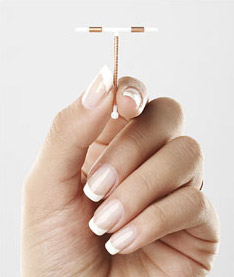 Recently Kate Klonick of State.com pronounced IUDs the best form of birth control for young women, sending the feminist blogosphere abuzz with bloggers sharing their IUD experiences. One thing is clear about this often overlooked birth control method: many people are unclear about the safety of IUDs, particularly for women who have never given birth. It's no wonder when women are getting such conflicting messages from the medical community. Erica Sackin from Planned Parenthood of NYC tries to explain why the message is so confusing.
The IUDs of our mothers' generation were linked to some pretty scary side effects, such as increased risk of pelvic inflammatory disease and infertility, but studies have found that the models on today's market, ParaGard (contains copper but no hormones) and Mirena (releases hormones into the uterus locally but contains no copper), are much safer. Although research shows that the IUDs currently on the market are safe, many doctors still refuse to insert them. Sackin lists possible reasons for this:
As with any birth control method, there are pros and cons which must be weighed based on your specific needs/what you're willing to commit to, and as Pearl wrote earlier, the best person to answer any contraceptive-related questions is a trusted vagina doctor. Of course you will not be protected against STDs with this method, but the pros of IUDs for women in monogamous relationships are impressive: cost effective, a non-hormonal option, nothing to remember to take, put in or take off and most importantly, a 99% efficacy rate in a real life setting. But with so many detractors of this method being doctors and infertility (supposedly) at stake, many young women, including me, are hesitant to take the plunge.
- S/he might still be reading old research.. It’s possible that your doctor simply isn’t familiar with the latest research or is following older clinical protocols.
- S/he might think it’ll be too difficult. It’s also possible that your provider is under the impression that an IUD isn’t possible to insert into a woman who hasn’t had children because their cervix and uterus hasn’t yet had to expand for childbirth. This also doesn’t mean you can’t insert an IUD into a woman who hasn’t had children, it just means it might be a little more difficult. Plus, it’s different for every woman -- our providers have sometimes had an easier time inserting a device into a woman who’s never had children than one who’s had four children.
- They might be worried about STDs. Since IUDs don’t protect against STDs, some providers might be hesitant to give them to women who aren’t married or in serious, long-term monogamous relationships. It goes without saying that while you should always be safe and protect yourself against STDs, this isn’t a reason for a provider to refuse an insertion.
It'd be great if the medical community could agree on the safety of IUDs (I suspect some doctors just have some catching up to do on the research), so that more women know there is another effective birth control option to consider and we could catch up to our European counterparts in usage rates.
Subscribe to:
Posts (Atom)

